HOW TO CONVERT A WHITE ELEPHANT INTO A GREEN ELEPHANT
When I visit industries for consultation on water management, wastewater treatment, and zero liquid discharge, the first thing that comes to my mind is the “White Elephant” when I see the rusted, corroded, and non-working assets installed. First, let us clearly understand what a “White Elephant” is all about. It is not a pale black elephant that is painted white! A "white elephant" refers to Literally: An Asian elephant of a pale black color that is mostly venerated in India, Sri Lanka, Thailand, and Myanmar as the brainy God Ganapathy ( Ganesh) for his intelligence, and people do pray him to get out of trouble. As per Hindu mythology, it is also believed that Indra, the King of Devas, owns a white elephant called “Iravath”.
Figuratively, a White elephant means- A possession that is troublesome or costly, especially one that appears valuable but is a financial burden.
The origin of the term “White elephant” comes from ancient Siam (now Thailand), where white or albino elephants were considered sacred and belonged to the king. According to historical accounts the story goes like this-
- White elephants in Siam were rare and considered sacred animals associated with royal power.
- The King of Siam would gift these rare albino elephants to courtiers who had displeased him
- While receiving such a gift appeared to be an honor, it was a burden because:
- The recipient couldn't refuse the royal gift
- The recipient couldn't work the elephant (as it was sacred)
- The recipient had to provide special food and accommodation for the animal
- The cost of maintaining the elephant would often financially ruin the recipient.
This historical practice evolved into our modern metaphor for an expensive, troublesome, or useless possession.
In modern usage contexts, the term "white elephant" is used in several contexts today:
1. Burdensome Possessions: Used to describe any costly, troublesome item that's more trouble than it's worth. Examples include industrial zero liquid discharge systems, projects with cost overruns, or Capex, Opex and maintenance-heavy possessions.
2. White Elephant Gift Exchanges: A popular party game, especially during holidays, where participants bring wrapped, often humorous or unwanted gifts that are exchanged following specific rules. Everyone brings one wrapped gift without an intended recipient, and all guests exchange these gifts at random while following the established rules.
3. White Elephant Sales/Events: Charitable sales where people donate unwanted items to be sold for fundraising.
4. In Business/Employment: In some regions, like Austria, the term means "workers who have little or no use but cannot be dismissed."
5. In architecture/real estate, it refers to palaces, forts, and buildings or structures that are expensive to maintain but difficult to dispose of, often due to historical significance or other factors.
The term has evolved from its historical origins but maintains its core meaning of something that appears valuable but ultimately becomes a burden to its owner.
Now you must be getting an idea as to what I am referring to! You guessed it right. I am referring to the zero liquid discharge systems installed in industries around the world and particularly in India. It is a super critical asset for an industry because, without this, they cannot continue their manufacturing operations due to pollution control regulatory compliance requirements. It is quite expensive to own, operate, and maintain, but you need to have it to continue your operations or shut down your operations if you don’t want to comply with regulatory requirements.
Industries do spend a lot of their hard-earned money reluctantly installing the ZLD unit and after installation, many of them find that it doesn’t work or work less efficiently at a high cost thus draining users’ profits!
Am I finding fault with the regulatory policy? A categorical “NO” when I consider the prevailing industrial water management, wastewater treatment practices. Pollution control regulatory agencies are doing their job of controlling pollution, which is an essential and mandatory requirement to save society from environmental disasters. Unfortunately, in India, we very rarely understand that a good water management practice and wastewater treatment system, i.e. well well-designed, operated, and maintained, is a prerequisite for a zero liquid discharge system. Thus, we end up catching the tail and not the head!
Who is polluting? Nature recycles the matter efficiently. It is we human beings with 7 senses (6 natural + 1 Artificial intelligence) and not animals and other living organisms. They have learned to live with nature harmoniously, but we humans have not learned it yet, and we abuse the environment and endanger the planet. What we lack is a “common sense” approach that is simple and less complicated to adopt.
Fine, now we have invested in a ZLD unit and met our regulatory obligation, but what now? Happily, can we go home peacefully and have a nice sleep? Nobody gets to sleep peacefully because of the problems that are encountered daily.
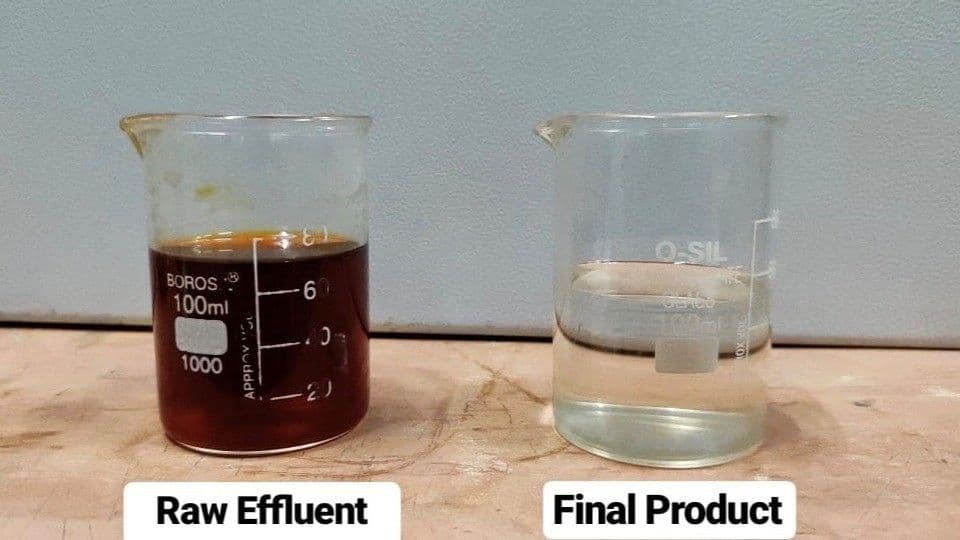
If the ZLD unit works and produces “CLEAR” water, then the question arises as to how the “CLEAN” the ZLD-treated water is. Is it “Fit for Reuse”? Where can I use such very expensive water? After undergoing various treatment processes and spending energy and resources, if the water cannot be reused, then what use is a heavy investment in the ZLD system? The regulatory authorities' mandate is clear, and it is to reuse the water in manufacturing operations. The fact is that reusability depends on how clean the recycled/recovered water is. The cleaner it is, the more costly it is. If the recovered water is not clean enough to be reused, what do you do with that? It becomes a nonperforming asset/a dead investment, a waste of money, and a drain in your coffers. In this context, ZLD systems are a white elephant until you realize in a hard way that i.e, getting a warning/legal notice/encashment of your bank guarantee issued to the government. Bank guarantees are taken only to instill in industries the fear of encashment in the event the industry fails to meet its regulatory compliance requirements.
Now, coming to the topic of this article, “How to Convert a White Elephant to a Green Elephant,” there are few common-sense approaches the decision-makers to follow.
1. Your options are clear—do “nothing”, do “something”, or do the “right thing.”
2. The first 2 options are not going to take you anywhere
3. Decide whether you want to protect the environment out of love for Mother Earth or to be a responsible business just to show that you meet the regulatory compliance requirements and remain in business.
4. The first category of people will do the “right thing”, and the other 2 categories of people will do something or anything!
5. Do a deep analysis of what you need to do, how to do it, and when to do it. Prepare a Road map to efficient water management, wastewater treatment, and minimum and zero liquid treatment.
6. Decide what you want to do with the recycled water. It is even more important that the recycled water quality is measured online with the right water quality analyzers and data logged in real time.
7. Allocate sufficient human and financial resources.
8. Find a technologically neutral partner who can provide you with the right advice and equipment because the right advice is half the battle won! The right technology partner will guide you through the selection and implementation process and provide you with the assured quality of water for various reuses. Your right partner will provide you with cradle-to-grave support!
9. Beware of salespeople who want to sell you a piece of equipment, not provide you with the right solution.
10. Ready to spend a good amount of money to get a quality, well-engineered system
11. Finally, make an informed decision based on the “stacked benefit procurement” model and not based on the “lease cost procurement” model.
12. Systems procured based on the least cost model have turned into non-performing assets (NPA) and white elephants.
13. Involve all stakeholders, take their opinions, and go with the collective opinion. When something goes wrong, they are available to consult and take support from.
14. When you try to create a good asset for your company, you get “Peace of Mind” and a “Piece of equipment.”
15. A good asset is a green elephant, and a bad asset is a white elephant!