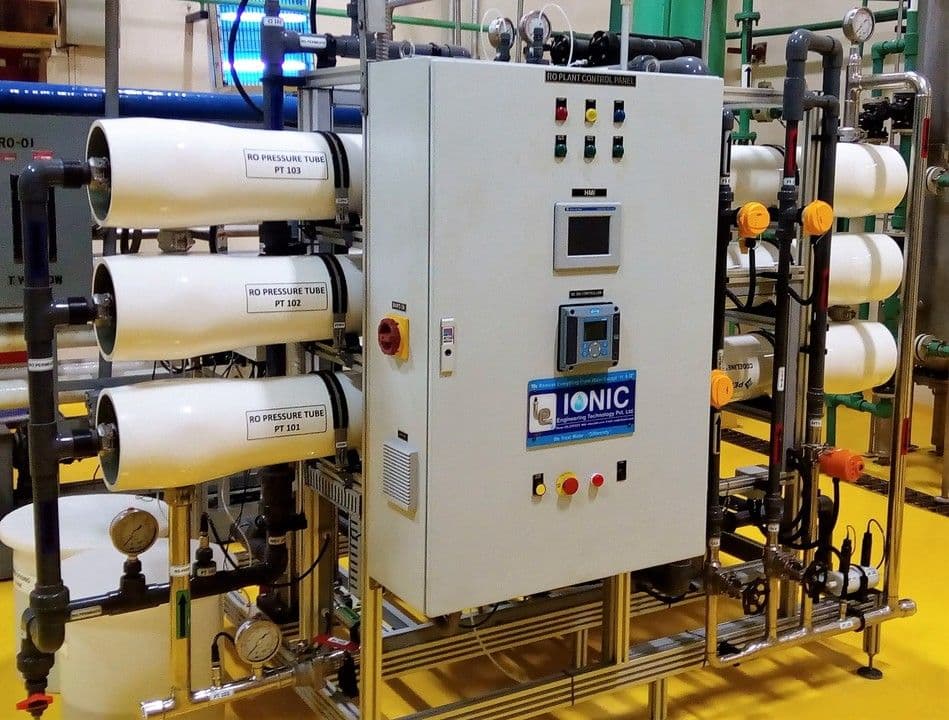
The only way to Stop Reverse Osmosis System Failure is to Prevent It!
“Matrix” Real Time Remote Monitoring
Can help you do this!
“ECG” for RO systems only from
We treat water differently
We are here to make a difference
The problem at hand:
- There are thousands of Reverse Osmosis systems getting installed all over the world for drinking water to critical process water applications. The proliferation of assemblers with little knowlegde on the subject has resulted in a situation that has put a big question mark on the reliability of R.O technology. As such R.O is a 40 year old proven technology. The process technology has not changed over this period but significant improvement has been made on element design, membrane chemistry. New emerging RO process technologies that can reach up to 98% recovery are patentded and are not widely availble to customers like traditional RO process. Thus conventional R.O process will continue to be deployed till the new technologies mature and made widely avilable.
The problem of total failure and poor performance:
- The heart of Reverse Osmosis technology is the semi permeable R.O membranes. R.O is a pressure driven process in which applied net driving pressure exceeds the osmotic pressure of the feed water. As long as the membrane surface is clean and undamaged the membranes produce purified water of requierd quality and quantity. However the performance is affected by many factors including but not limited to Poor pretreatment design, Poor R.O system design, Poor Engineering, Poor quality of components , Poor operation, Poor maintenance, Poor monitoring, Poor Cleaning etc. to name a few. The membranes themselves degrade over a period of it’s predicted life time increasing the salt passage and reducing the flux by about 7-15%. The multiple feed water sources adds to the complexity of the problem.
The problems reported by users are
- Lower recovery and wastage of water
- Lower permeate flow
- Poor quality of RO permeate
- High pressure drops and membrane damage
- Excessive frequent cleaning of membranes
- Frequent replacement of membranes
- High down time
- High operating cost
With Matrxi see what is happenining inside even before it happens!
The driving factors for the change:
Today’s Key Performance Indicators for Industrial Reverse Osmosis
Industries are being reshaped by major disruptions and the companies embracing these changes are gaining a competitive edge against their competition. Today’s water and wastewater treatment professionals know that an increased public awareness and scrutiny around industrial water use has driven industry leaders to more closely to manage their water resources. As corporate teams define sustainability initiatives to: reduce water footprint, increase bottom line profitability, and reduce risk associated with public, shareholder and customer backlash; the management and operations teams at the plants are left to implement the solutions. It’s not uncommon to see a disconnect between the corporate and plant level as the operational drivers vary from individual to individual.
By example, a corporate team may be pushing for a 30% reduction in water use over the coming three (3) years, however the plants are responsible for coming up with ideas on how to achieve that metric. Normally, simple changes can be implemented around the plant to reduce wasted water (using wastewater for irrigation, replacing lawn with desert scape, using air rinse systems over water rinse systems, etc.), however eventually, the only options left come down to evaluating the performance of the core water treatment equipment.
In general, over 70% of industrial plants utilize reverse osmosis to generate boiler makeup water, cooling water, ingredient water, process water, ultrapure water, discharge requirements, etc. Today Reverse osmosis (RO) is ultimately the workhorse of industrial water treatment systems, with the performance dictating the requirements for the upstream and downstream equipment (if needed). Reverse osmosis process has several fundamental limitations. However new desalination technologies like Capacitive Electro Desalination and Electro Chemical Desalination technologies have been developed and is being increasingly accepted and deployed to overcome the limitations of traditional RO system.
To date, the industry accepted metrics for monitoring reverse osmosis performance have included the following:
Normalized Permeate Flow
Normalized Differential Pressure
Normalized Salt Passage
While these metrics will provide owners and operators the information necessary to anticipate when to clean their membranes, they don’t demonstrate how one company can achieve a competitive edge over another. Therefore, if you ask the majority of owners/operators how their RO is operating, many will respond back positively, not having the full picture or recognizing the opportunities for increased efficiencies. To align the objectives of the corporate teams with the management and operations teams at the plant, more information is required to provide complete transparency and accountability for how an RO is truly performing with strong Key Performance Indicators (KPIs).
The below questions are designed for owners and operators to assess how other aspects of RO performance can drastically change their objectives at the plant and corporate levels.
Is the total system including the pretreatment and RO properly designed, well-engineered and manufactured properly? Not all industrial reverse osmosis systems are created equally. Is the supplier is just an assembler of components or a company with in-depth knowledge in water chemistry, membrane technology and equipment?
Is the membranes replacement frequency is high? Are we seeing fouling or scaling on our membranes? Does the system require frequent cleaning? The answer to this question can determine CIP frequency, membrane life, system downtime, chemistry program, etc.
Do you have the Right membrane in the system to suit your raw water source characteristics? Over the past several decades the RO membrane chemistry and technology has matured. The changes are related to element design, membrane chemistry, membrane surface properties, feed spacer design etc. to name a few. With several membrane manufacturers in the market place claiming better membrane chemistry and element design the main problem of poor performance and total failure is common.
If we could increase our RO recovery from 75% to 98%, how would this effect our monthly water and wastewater bill? As the costs of water rise around the world, some at over a 10% CAGR, reduction in water footprint can drastically reduce operational costs. In addition to the benefits to the local plant P&L, these efforts can increase shareholder value companywide both in terms of dollars and the CSR benefits of gallons of water saved.
If we could reduce the permeate conductivity by 50% by operating tighter membrane elements, how would this effect the performance and associated cost of downstream equipment? In the steam and power generation industries, increasing cycles in the boiler or reducing loading to downstream polishing equipment can outweigh the energy cost associated with operating tighter membrane elements. In the beverage industry, lower permeate quality can open the door to new bottling lines/products.
Does our RO system automatically adapt to seasonal changes to ensure a consistent product water? If your plant sees variability in feed water due to conditions outside your plant in terms of conductivity and temperature, your RO should automatically adapt to these changes. What are the consequences if this doesn’t occur?
Does our RO have the flexibility to handle changes in feed water source or composition that may come in the next ten years? As the water industry becomes more closely monitored, new water and wastewater sources are being utilized that can be out of the control of the industrial plants they serve. Are you currently setup for success or failure?
If you ask yourself and your team these questions, it will be an invaluable exercise in assessing RO performance and will allow your team to align itself with other stakeholders in the organization.
Reverse Osmosis for Industrial water purification: Setting Priorities
Previously we explained some of the important ways reverse osmosis systems differ from one another— but to choose among them, you'll also need to know what matters most for your business. A self-assessment is an important step in the decision-making process.
In this article we’ll explore some of the key questions to ask yourself about your needs and priorities.
Questions to ask yourself:
Is this a new installation?
Do you have any other water purification equipment already? Will a new system need to be hooked into an existing water treatment train or are you starting from scratch?
This may be a good time to perform an organization-wide water audit. Take stock of all the processes in your organization that use water to see where you can make the biggest improvements.
How much space do you have?
Reverse osmosis systems, especially multi-stage systems, can have a large footprint. It's easy to overlook, but don't wait until the last minute to take measurements and ensure you have enough space for the systems you're considering. You may want to look into compact, single-stage systems if space is an issue.
Do your water needs vary over time (e.g. seasonally)?
One of the more difficult challenges for traditional reverse osmosis systems is dealing with a dynamic feed water supply. Many facilities have water that varies seasonally due to the water source. Your water may actually be from a river that is affected by seasonal variation, such as snowmelt in the spring or increased surface run-off during hurricane season. If this is the case, there are industrial reverse osmosis systems that can adapt to varying feed streams - just make sure you select one for your project that is capable.
Do you have multiple streams of water that require treatment?
Like seasonal variations of water - different processes use and produce differing water streams. Do you need a system that can handle multiple feed water streams? There are options out there that can accommodate varying feeds, but not all of them can. This is a question you should ask your RO provider when doing initial research.
What are your water concerns?
Are you trying to reduce the money you spend on water? Are you striving to reduce overall water use to a certain volume? Perhaps reducing your liquid waste volume to meet municipal regulations? Is achieving maximum recovery your only concern? Are you trying to eliminate unreliable performance in your current water purification train? How do these issues rate compared to one another?
Make a list!
By now you've asked yourself a lot of questions. It's time to make a list. Make note of all the concerns you have about water use and rank them in order of importance. It's a valuable exercise. You'll inevitably need to make decisions about which things matter more to you — high recovery versus decreased maintenance, for instance, or capital expense versus wastewater disposal costs. Setting your priorities early will help you be prepared to compare systems in a way that addresses your needs.
Industrial Water Purification: Comparing Reverse Osmosis Systems
Since the 1970s, reverse osmosis (RO) has been a standard technology for industrial water purification. It's easy to assume that all RO systems are interchangeable, but this isn't the case. Recent advancements in reverse osmosis technology mean that some systems can now achieve water recovery rates as high as 98%, while others are still limited to less than 75%. Many systems still operate at < 50% recovery and efficiency level.
Learn how to compare RO systems so you can ensure that your water purification system is not obsolete.
What Separates Different Reverse Osmosis Systems?
Although the designs of different systems are broadly similar — they all use a pump to force water across a semi-permeable membrane that only allows pure water through — not all industrial reverse osmosis systems are created equally. Here are three useful points to consider:
How high a recovery can it achieve?
How much maintenance will it need?
How much oversight will it require?
High Recovery - What Recovery Rate Can It Achieve?
Historically, large-scale reverse osmosis systems typically achieved between 75% to 85% recovery of their feed water. Although recovery rates will always depend on the chemistry of the feed in question, today there are options for higher recovery rates (up to 98%) and leading industrial reverse osmosis providers will offer a guaranteed minimum recovery rate with their systems. Make sure you are getting the maximum recovery rate possible and make sure your provider is trustworthy enough to guarantee it.
How Much Maintenance Will It Need?
Reverse osmosis systems for industrial applications represent a significant capital expense, but costs of operation should not be overlooked. Every reverse osmosis system needs periodic cleaning and membrane replacement. However, how often these cleanings and replacements are needed can vary wildly among different systems. Of course, it depends on the situation, but today's newer industrial reverse osmosis processes generally require less maintenance and can go much longer between cleanings when compared to legacy RO processes. Be sure to ask manufacturers about typical clean-in-place (CIP) and membrane replacement frequency when looking at your specific project.
How Easy Is System Management?
We live in a world where our phones can control almost every device in our lives - why not your reverse osmosis system, too? Online monitoring and remote system control are increasingly popular features, but they’re far from standard inclusions. These "quality-of-life" improvements for your business may have less obvious economic benefits, but they’re an important part of making an informed decision.
The reasons for poor performance and total failure:
There are many reasons for poor performance but some of them are beyond the control of the designer (e.g. – seasonal variation, temperature change, multiple sources) and user and many of them are self-inflicted problem (e.g.- poor pretreatment, poor RO design, poor operation and maintenance etc.) Failure to understand the water chemistry, fundamental principles, fundamental limitations of the process are all additional contributing factors for poor performance and total failure of the R.O systems.
Even in ideal conditions R.O membranes themselves undergo changes which are responsible for increased salt passage and reduction in flux during its projected life time of 3 years. Salt passage and reduction in flux of 7-10%/ year are specified by manufacturers which are known to the industry. The flux and salt passage also is affected by feed water characteristics and temperature. For example, for every 1 deg C in temperature change of feed water the estimated salt passage and flux change is about 3%. Thus a 10 deg C change will result in 30% change in flux and salt passage. If necessary changes are not made in the applied pressure taking into account, the variables there will be negative impact on the performance due to excessive recovery when the feed water temperature increases. Excessive recovery leads to membrane scaling and fouling!
Complexity of the R.O process:
R.O system though looks simple is a complex process. Membranes are sealed and installed in a pressure tube and what is happening on the surface of the membrane cannot be visualized unless one does an autopsy of the membrane.
- In concept, RO is a simple process. Water under pressure is forced through a membrane. The membrane rejects both dissolved and suspended solids to produce a permeate free of contaminants. The process may be described as filtration on a molecular level.
- Though the system is simple when looked at externally and operates unattended, what is happening inside is more complex to visualize.
- There are many physio-chemical processes that happen inside the membranes which is invisible and hidden from the human eye.
- Unlike most filtration processes, however, RO is not simple to monitor. You will find below a list of the raw data that are usually collected during RO operation.
- Many process variables like feed TDS, Feed pH, Feed ORP, Feed Temperature, Feed flow, reject flow, reject recycle flow Permeate flow, Feed pressure, Reject pressure, Permeate pressure, permeate conductivity etc. needs to be measured, calculations done, meaningful information derived, data logged and analyzed.
- After recording the raw data, yet another set of calculated values must be prepared using this data, from which RO performance can be determined.
What happens when the system fails?
- Productivity is Poor or Nil
- Treated water quality is poor or unacceptable
- Frequency and cost of cleaning of membrane is unacceptable.
- System availability is poor
- Membrane failure, replacement cost and maintenance costs are higher or unacceptable
What is ‘MATRIX”?
Matrix is an Advanced Reverse Osmosis control system with “Real Time Monitoring” Capabilities developed by Ionic Engineering Technologies with it’s over 30 years of experience in the field of water and waste water systems. Matrix control system works like an ECG which is used for monitoring the heart conditions.
Why “MATRIX”?
- All R.O systems performance decline over a period of time due to various factors
- It is very important to monitor these plants for reliable operation of the system.
Why monitoring?
Proper monitoring of a reverse osmosis (RO) system can be a tedious and time-consuming task. However, proper RO performance can only be determined by evaluating a number of parameters, including pressures, flows and conductivities -- all of which are the result of detailed monitoring tasks.
MATRIX Easy Control?
Matrix Human Machine Interface:
- Ref. values and present values are displayed continuously in user friendly way.
- Matrix special proprietary algorithms calculates ADP (Allowable Decline in Performance) of the R.O system continuously.
- If the deviations are more than the recommended values, it is immediately brought to the notice of the operator in clear English text